Being a gamer means being amazed by how people manage to build entire worlds from scratch, and how small and large parts work together. How game mechanics and game design are enhanced by the visuals. It is also about accepting that the world does not work the way you think it is supposed to. Accepting and learning its rules, intentional inconveniences, and constraints. When done poorly, it annoys more than it helps. It is then that questions arise in one’s head: Why is there an invisible wall? Why is the door locked? Why is it gated behind a grind?
Playing Ghost of Yotei, there is one particular element that made me think: this is actually a great constraint embedded into the open world. It is the map’s segmentation into zones. They are separated by narrow passages, which feels natural. More importantly, while still being an open world, this environmental choice creates a story-driven progression. Whatever you do, you will go exploring as soon as you feel like it. And no matter how you plan to do so, you won’t jump around the plot. The environment and the natural desire to explore push the player in the right direction (there are actually multiple directions to choose from, which makes it even more interesting plot-wise.)
It also makes a natural barrier in cases when you are just not ready to go somewhere yet. First, on a mental level, if enough effort is required to reach it, a player understands that there is a new area ahead. And hence, it is entirely their decision whether to continue or come back later, when they are more prepared, have explored the earlier areas, and have enough energy and time to go through the plot and onboarding sequences. Secondly, the gates can simply be closed to a player if the game itself says so—not literally closed, but made harder for the player to open (this is a cheap trick, of course, and I’d preffer see less, what actually makes Ghost of Yotei to stand out again: most of the game closed behind the plot progression instead of the skills, grind, and upgrades).
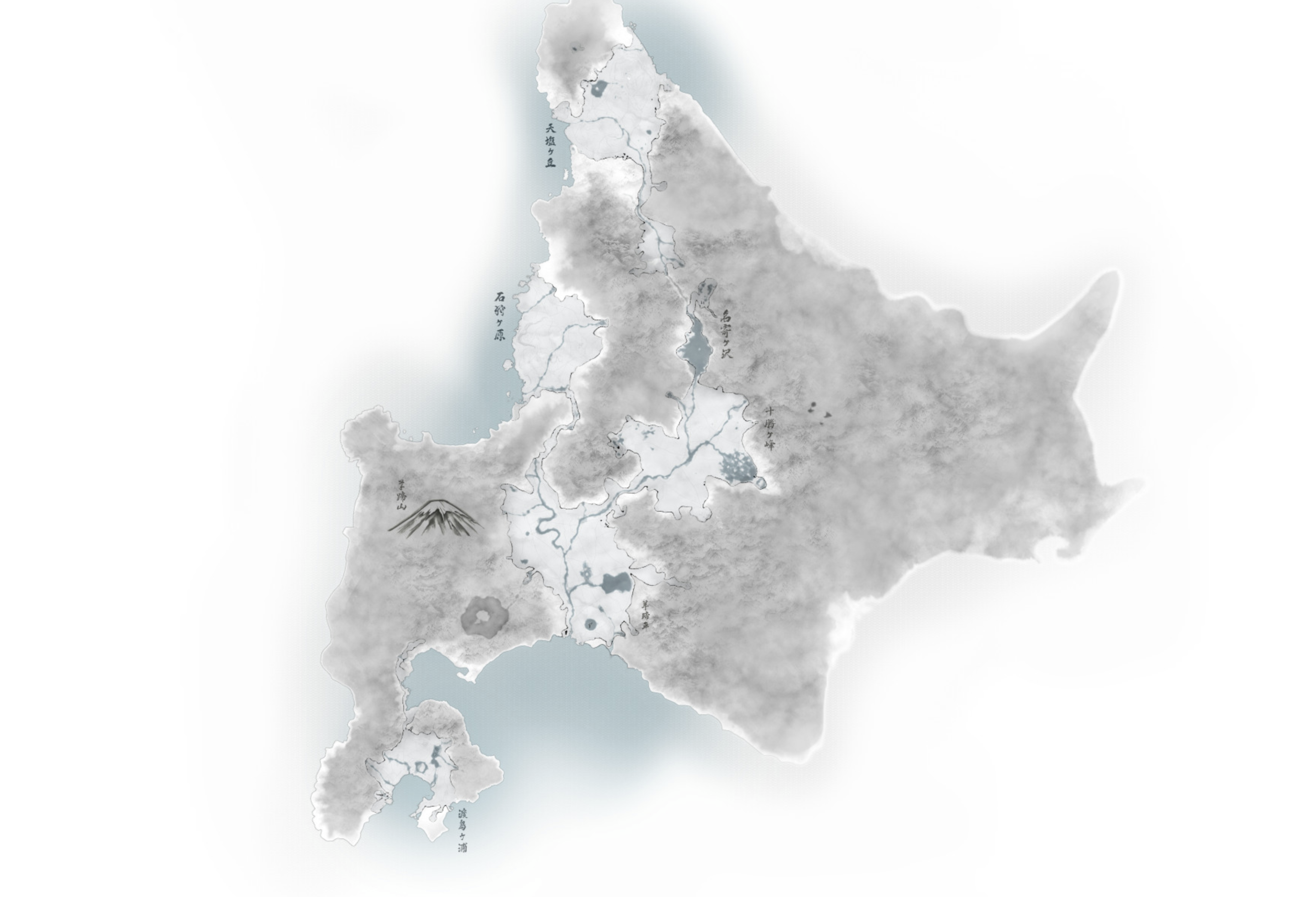
You are not nudged by question marks on the map to explore, and move the story forward. You are nudged to do all of that by visual tricks like red trees, towers, rocks, and hills that hide the view, as well as—what, in my opinion, is more sophisticated and, at the same time, more complex to build—by the shape of the map itself.
Autumn in Estonia gives a lot more time for gaming and working through the never-ending backlog. During the summer days, it is hard to justify staring at a TV for a few hours while sunlight is streaming onto it (and it only happens because I am too lazy to close the curtains, though became this reminder to shut everything down, and go to touch some grass). Early September is not yet here with 24/7 rain, grey washed colors, and cold wind gusts. But it is coming. September is just a transition between seasons, including my switch from a walking body to a couch potato. Until the next late spring.